Cyanotype Tea Bags
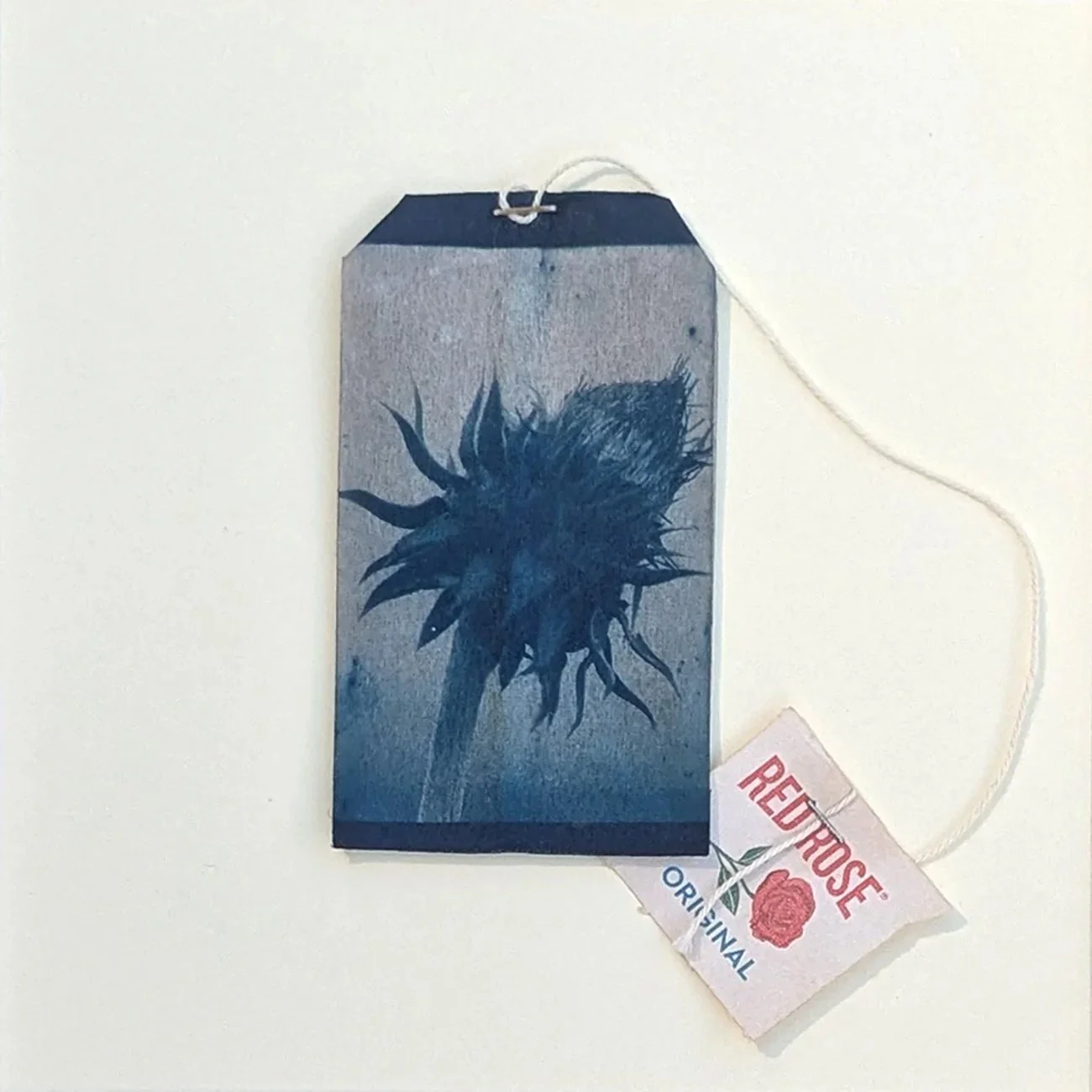
thistle
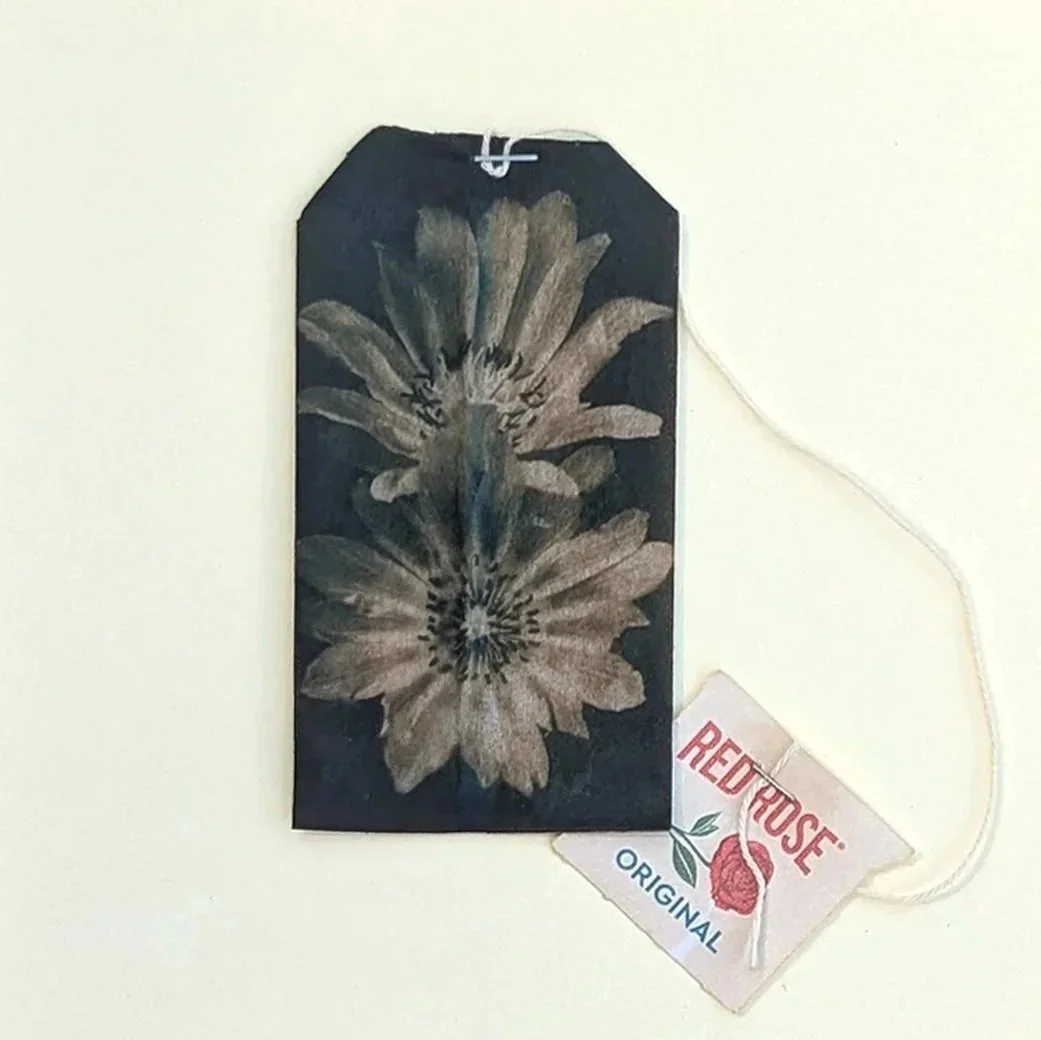
bitterroot
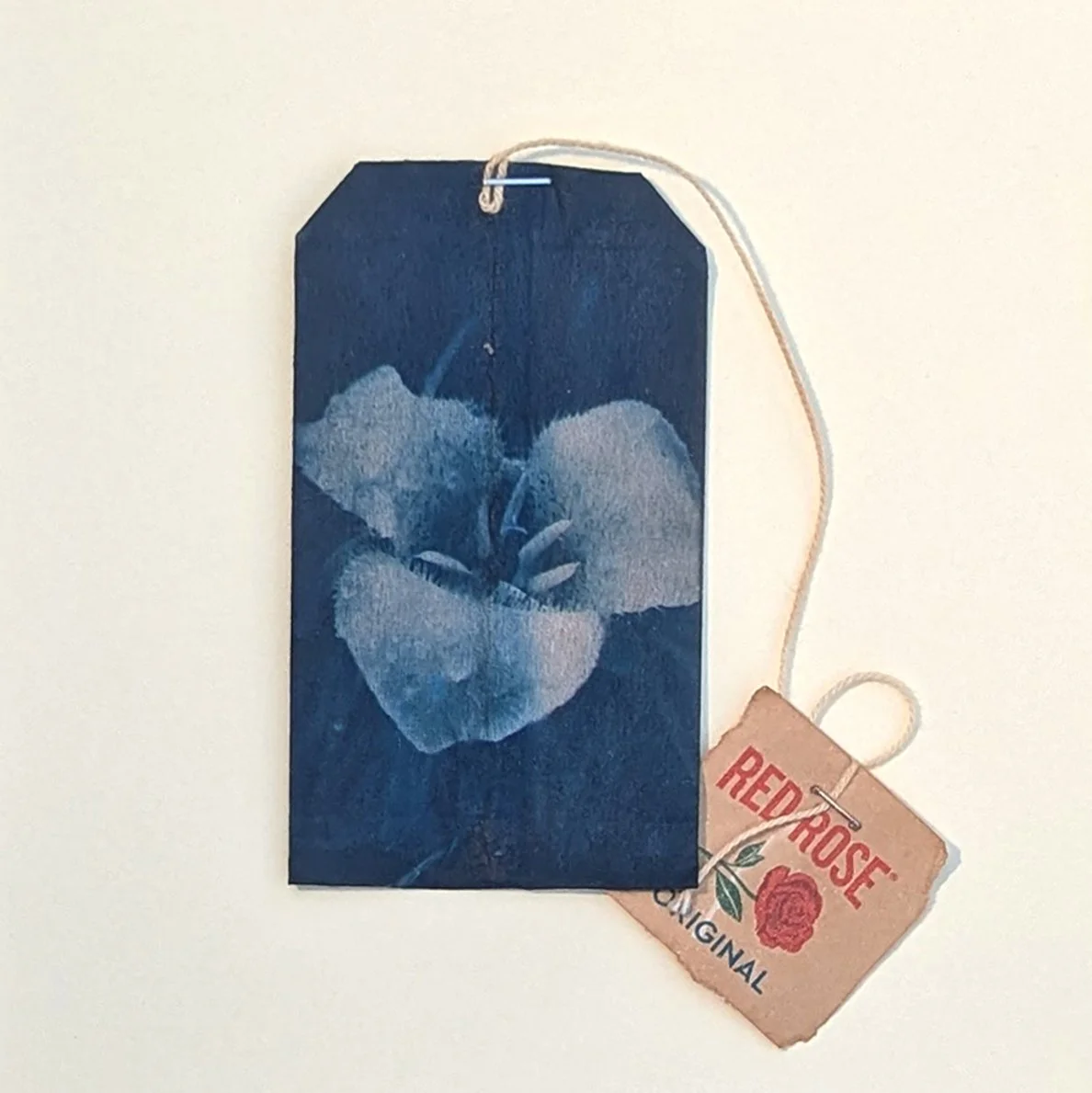
mariposa lily
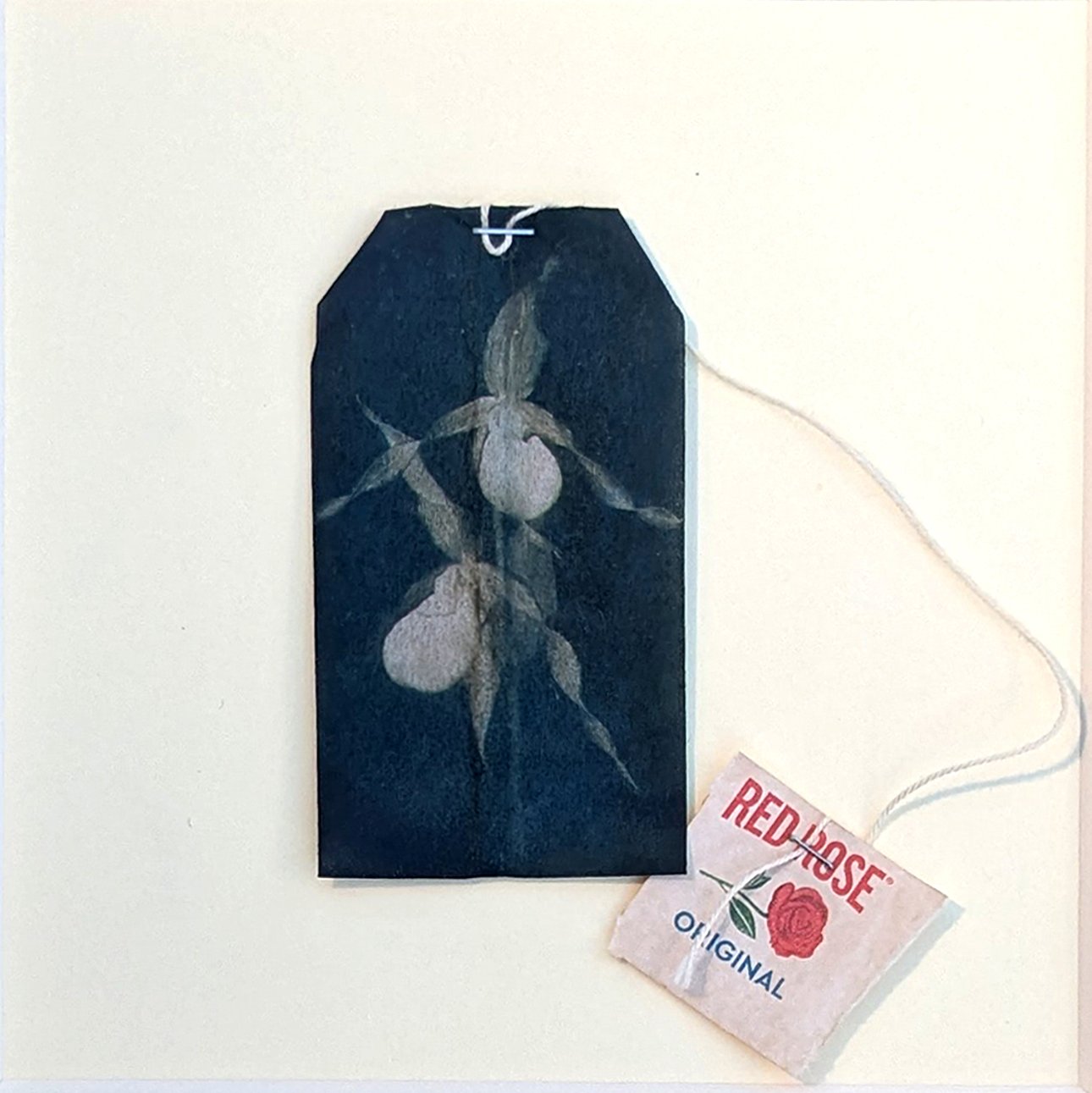
ladyslipper
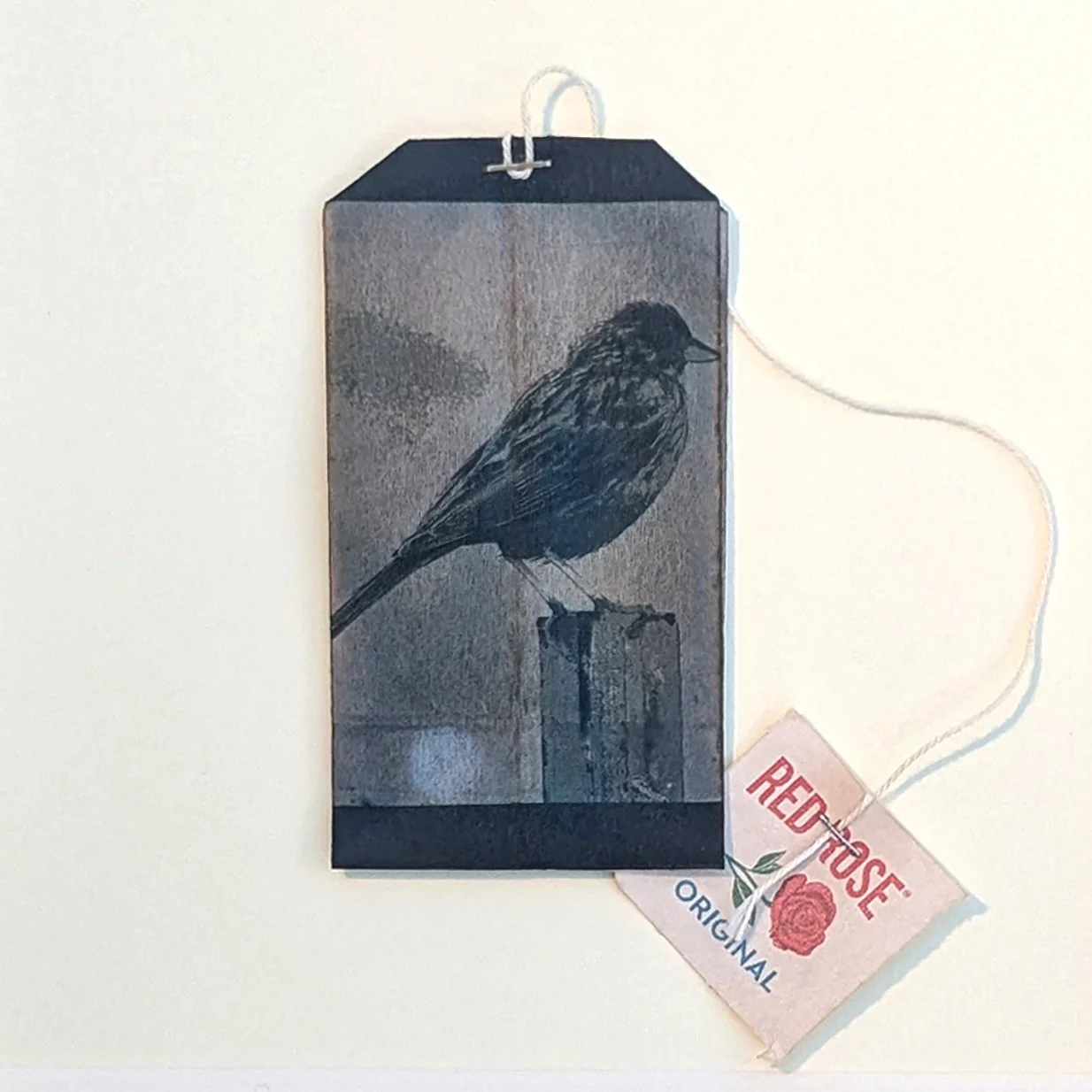
vesper sparrow
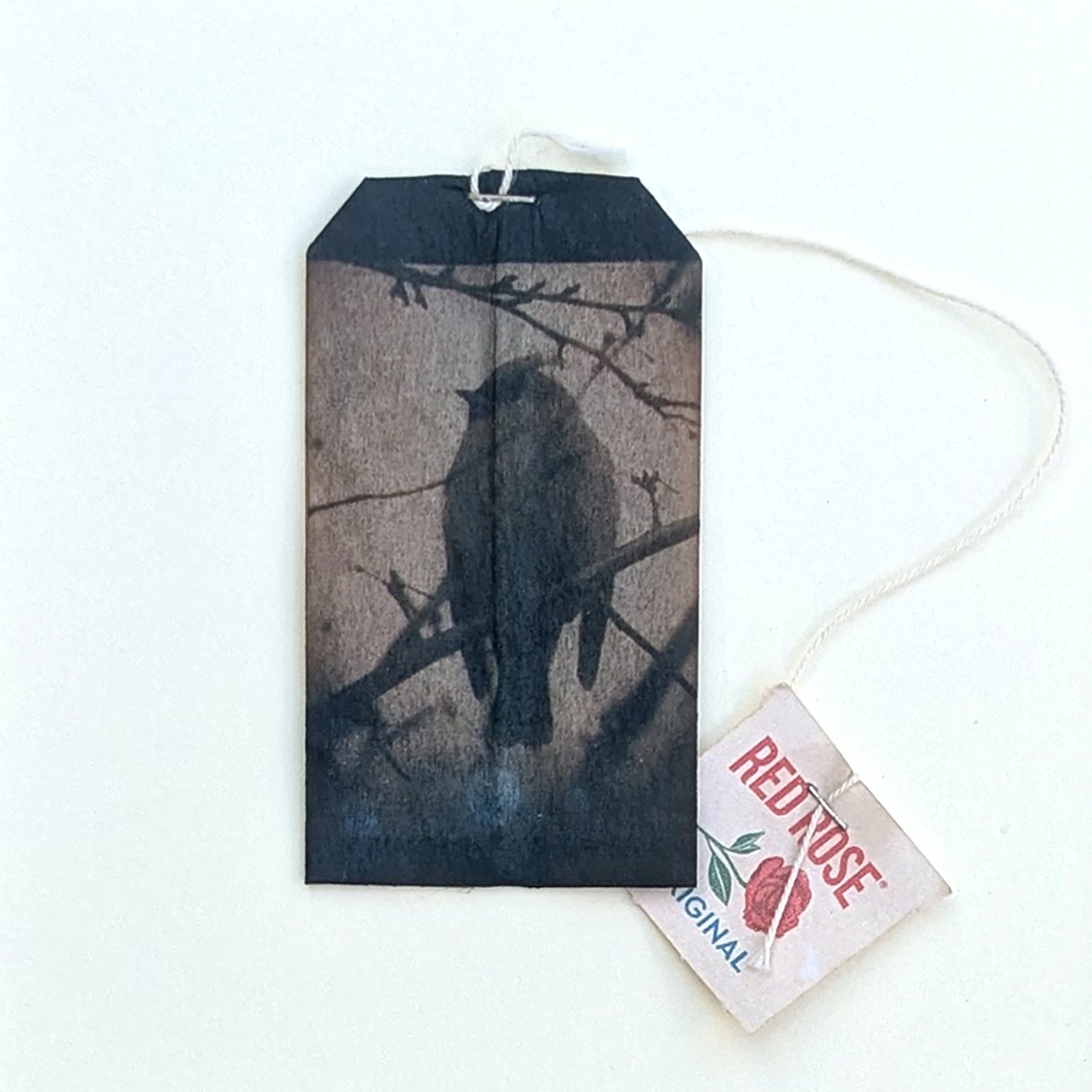
cedar waxwing
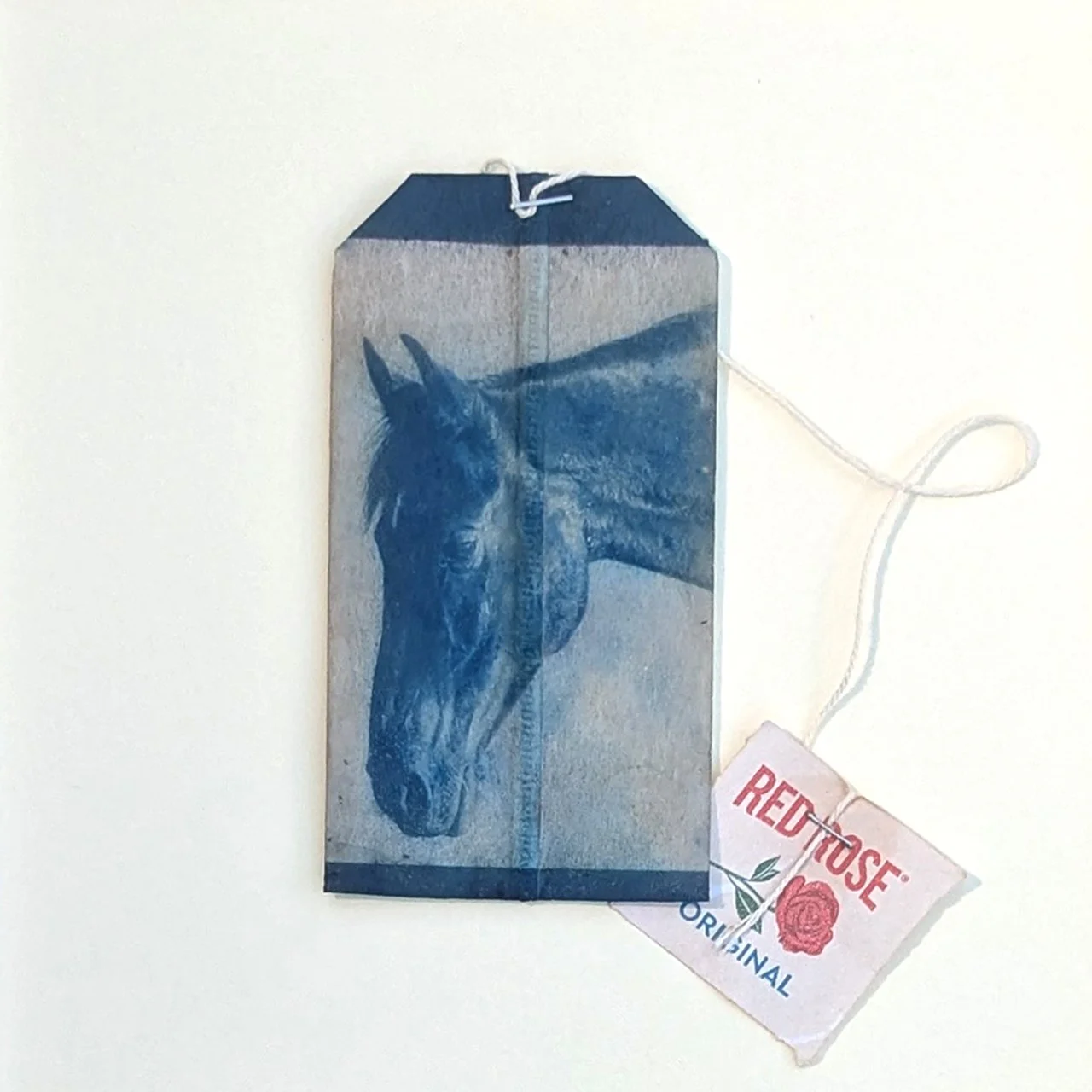
horse
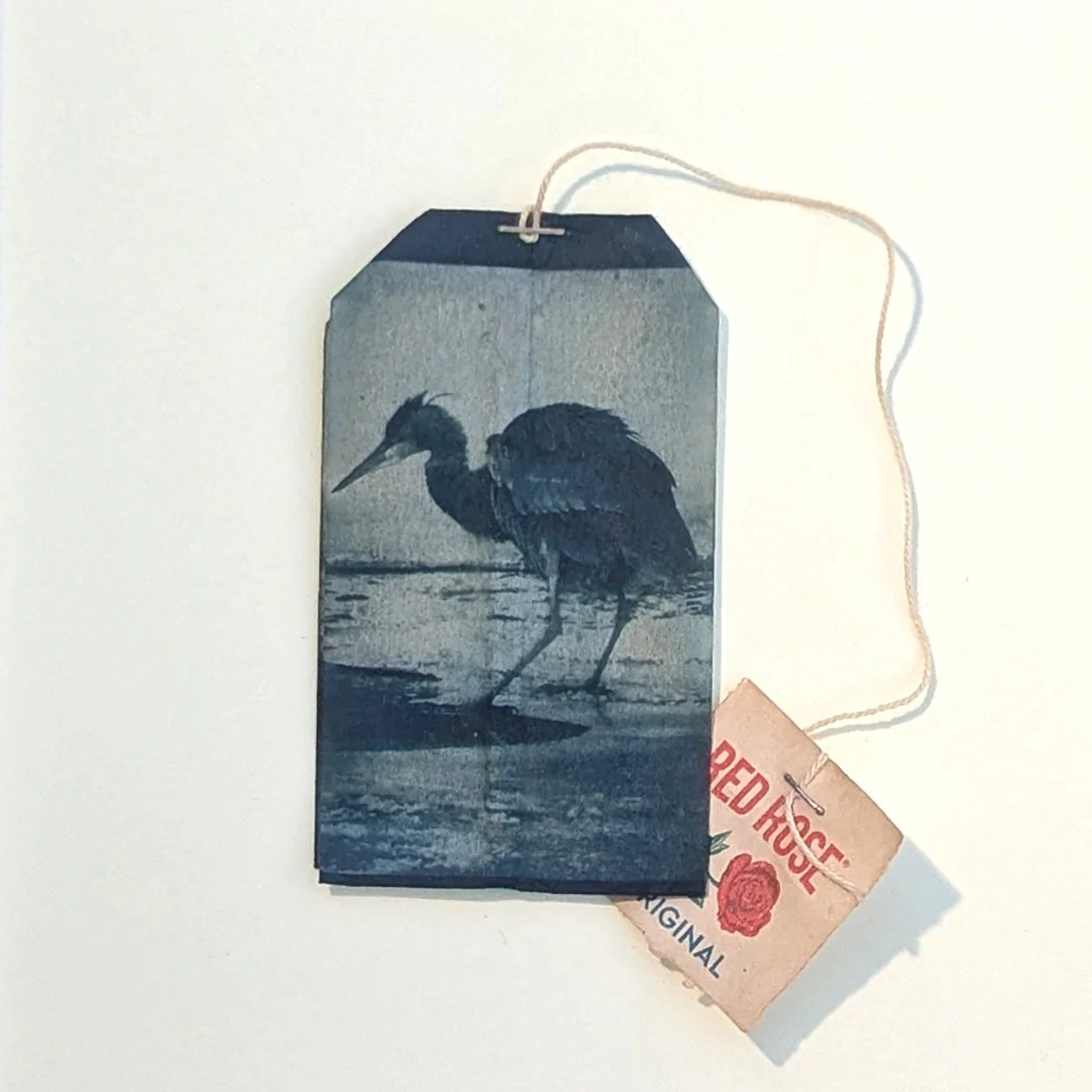
heron, waiting
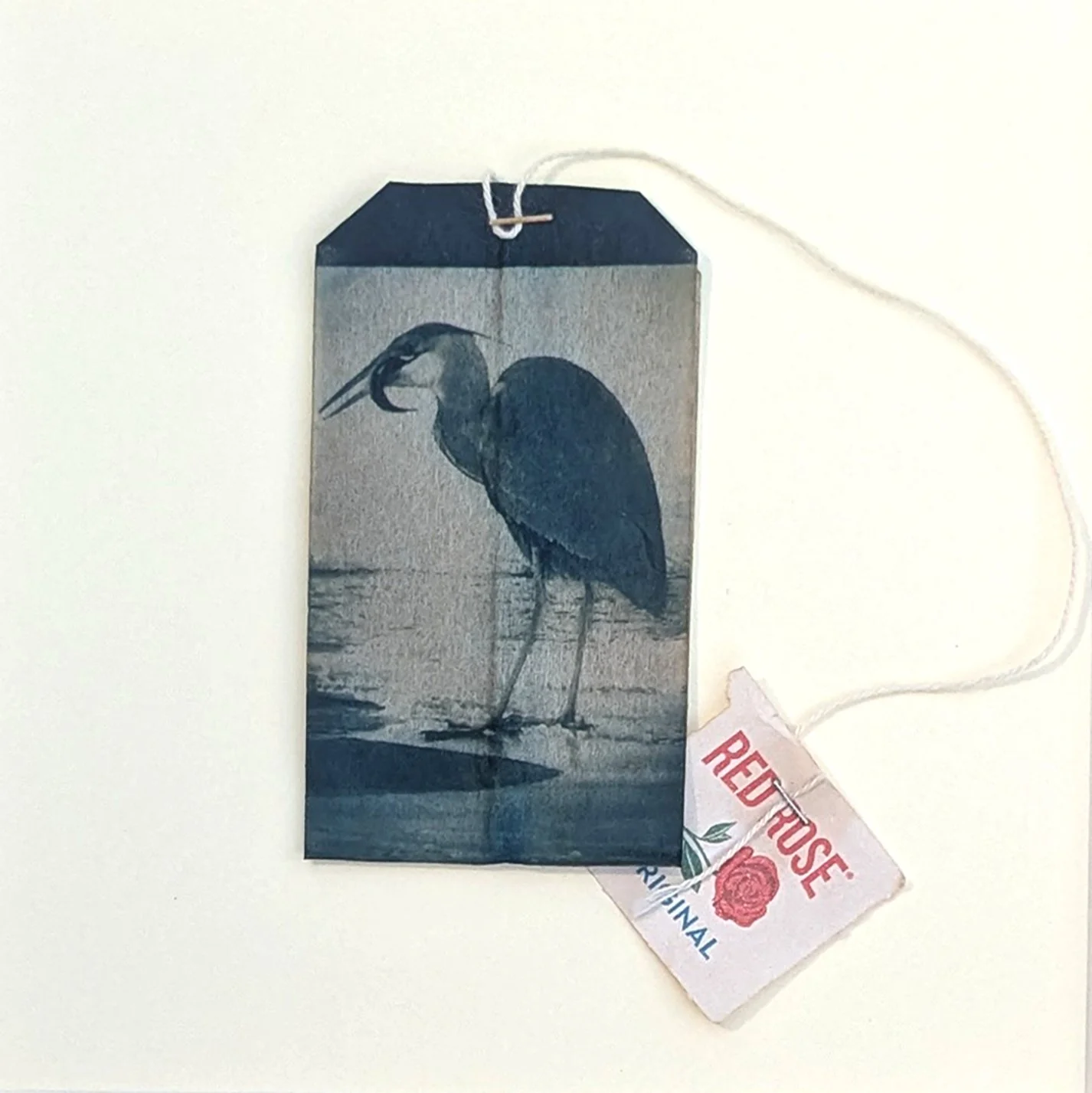
heron, with fish 1
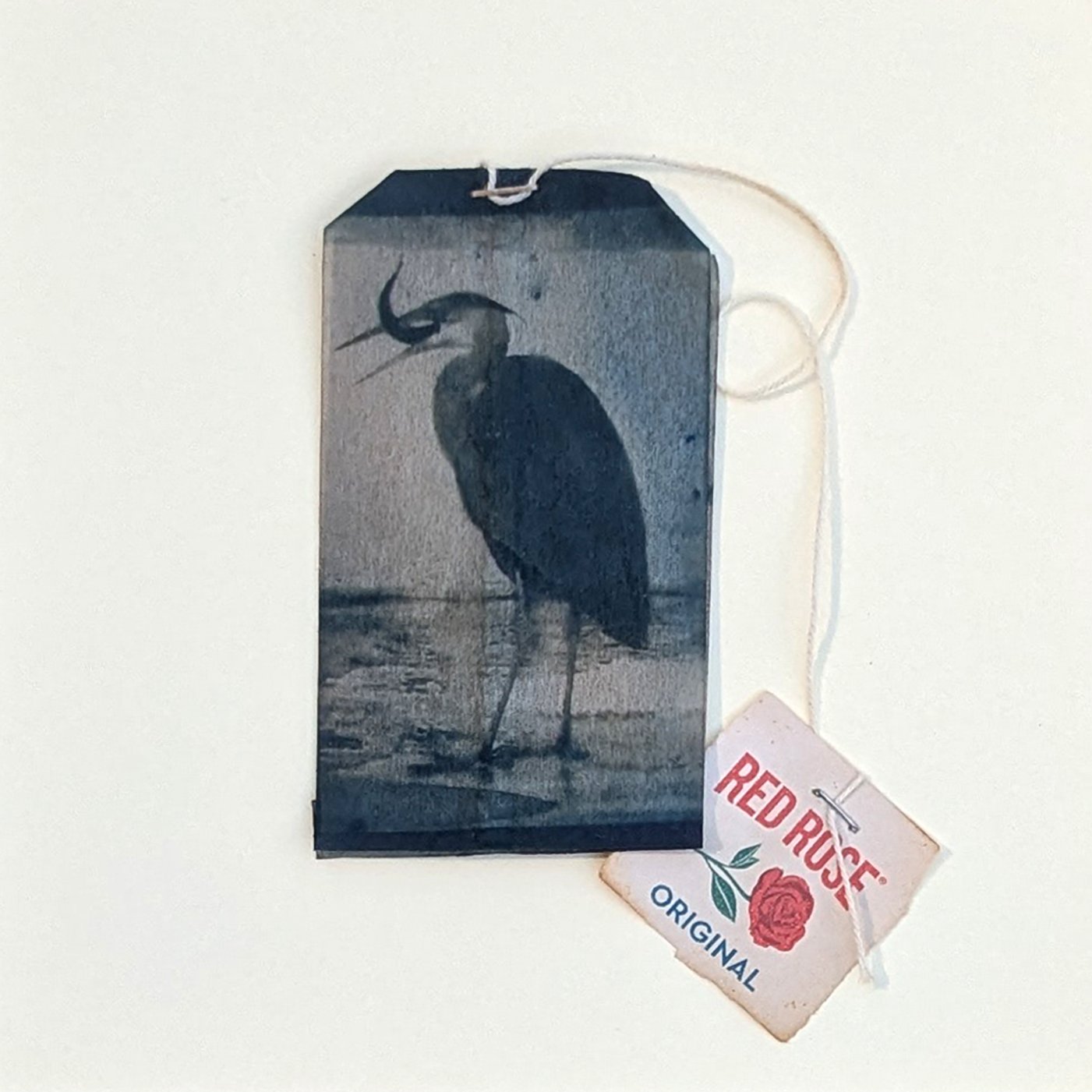
heron, with fish 2
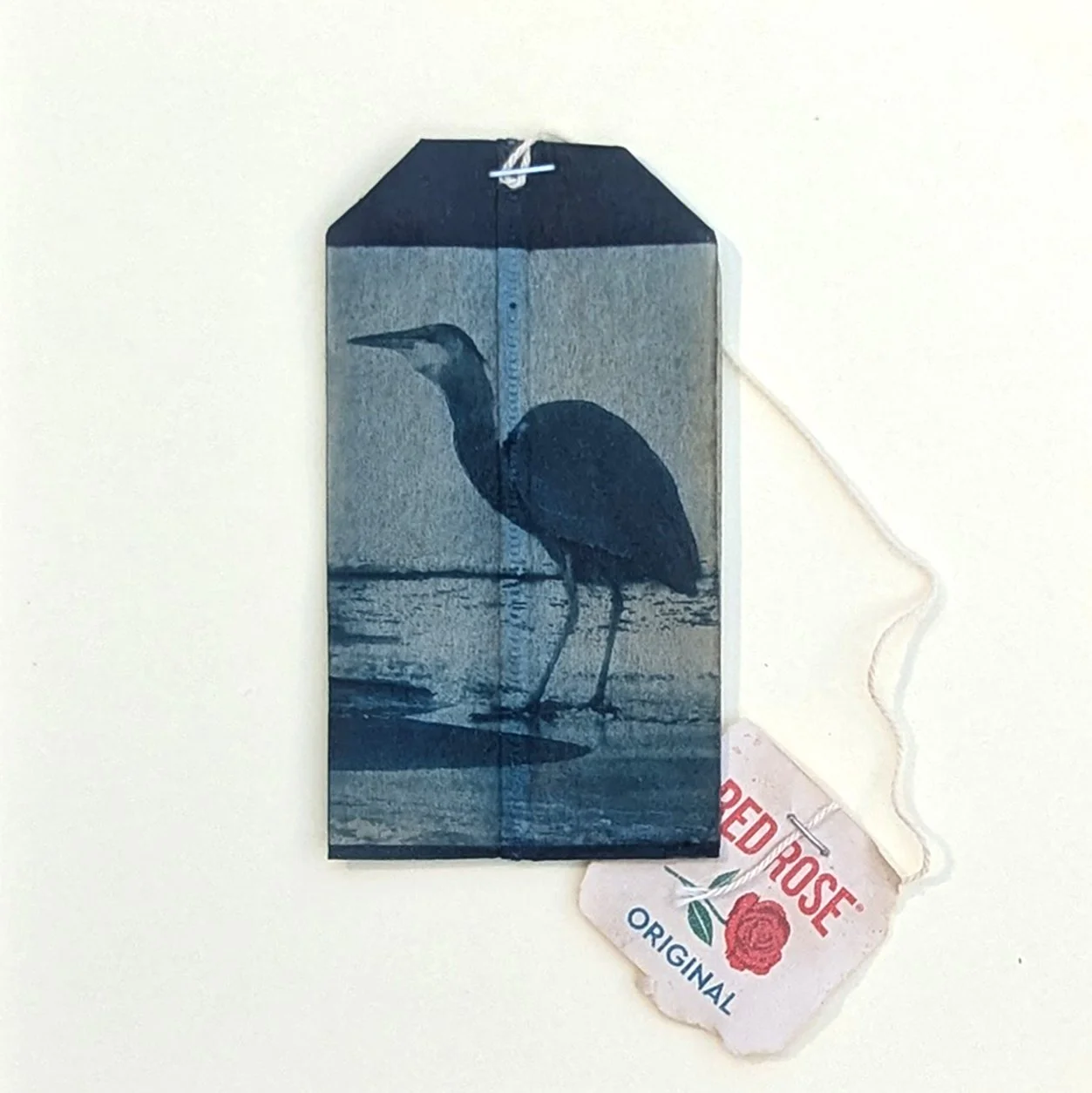
heron, swallowing
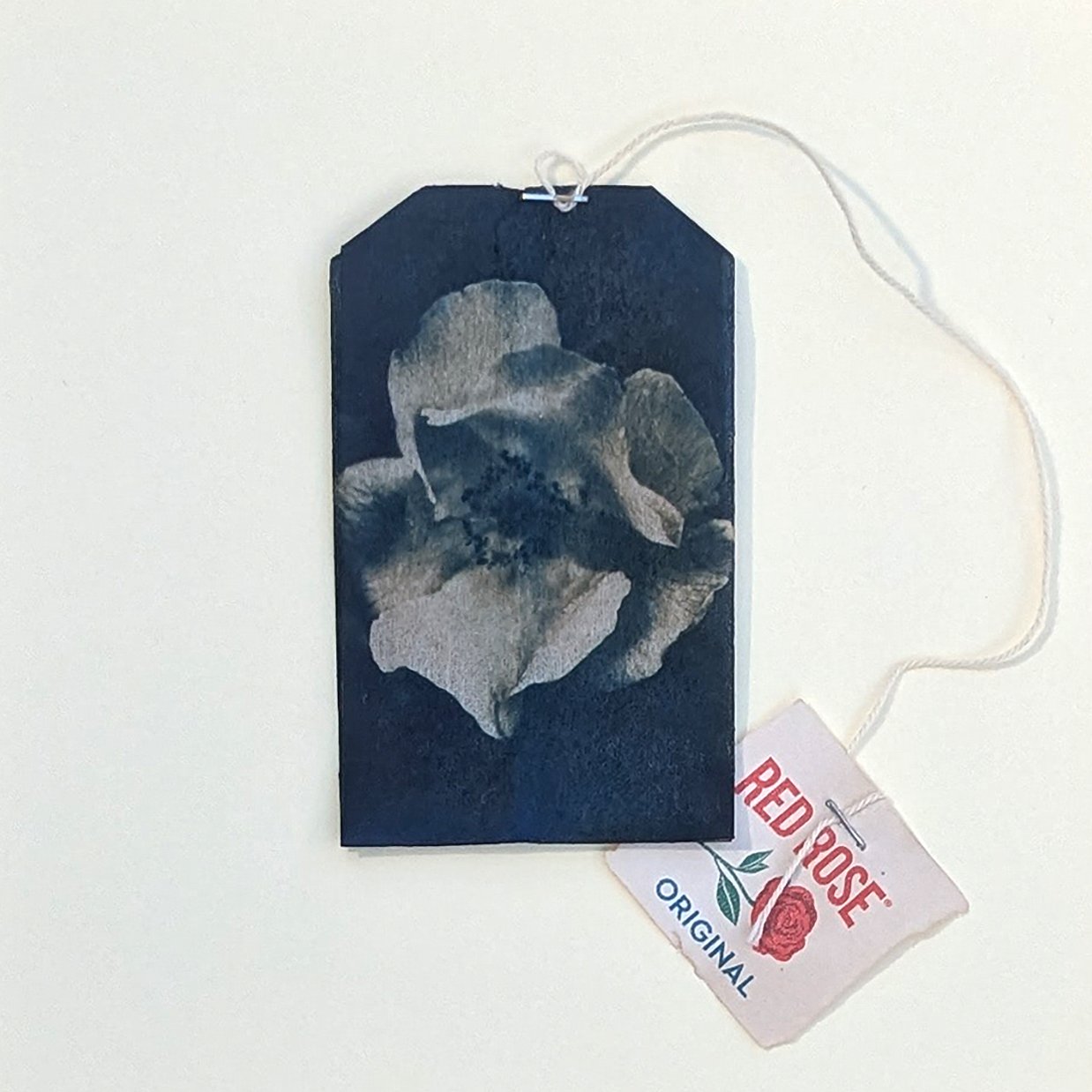
wild rose
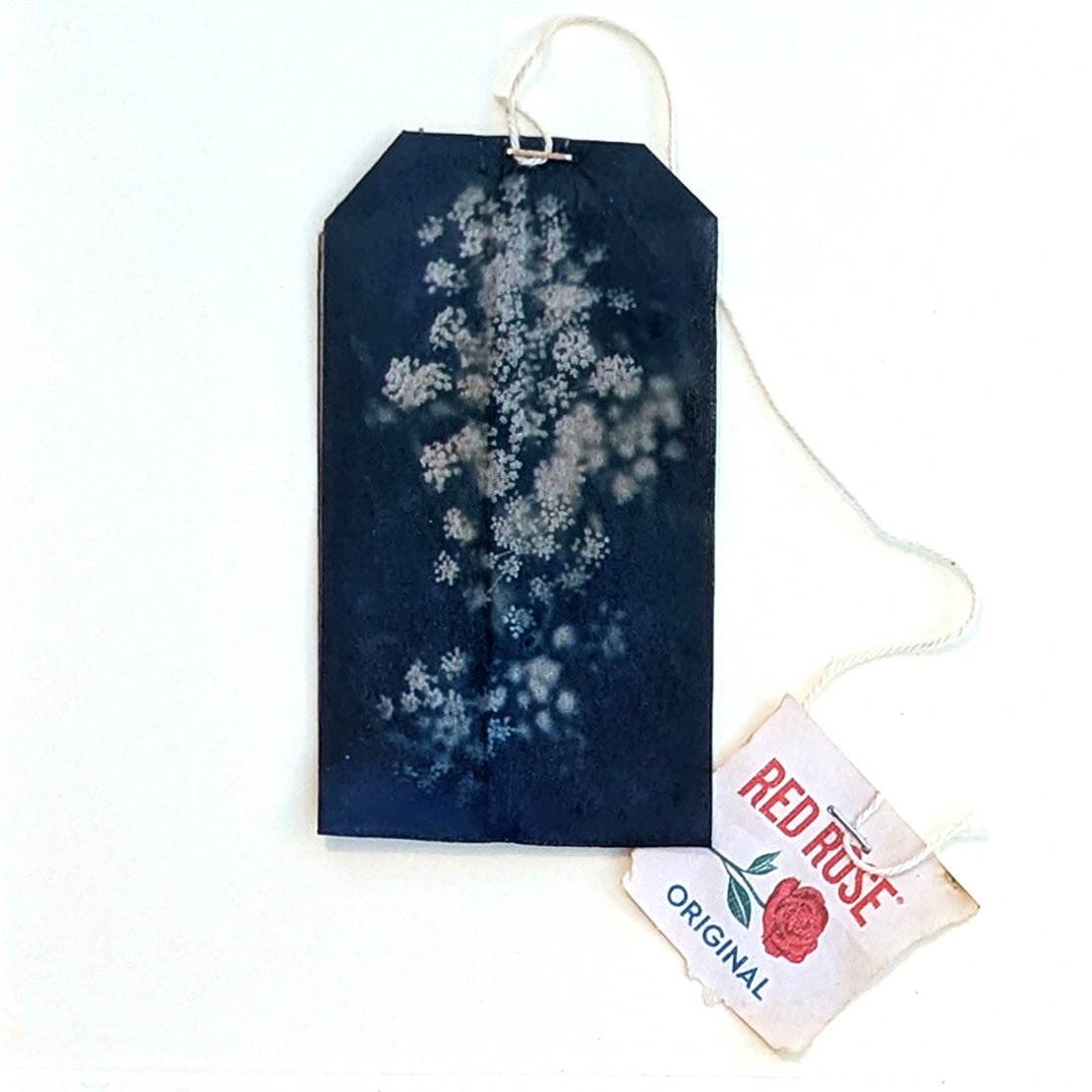
yampah
Working with cyanotypes has become a way for me to process fleeting images captured in photos that I’ve taken on my walks over the years.
Familiar sites along the paths I take - horses, wild roses, bitterroots, sparrows, chickadees, cedar waxwings, herons, yampah, feral pear and apple trees - repeatedly photographed, year after year, through the pandemic, as my son grew up, through major life changes, through every kind of weather and every season, have taken on deep meaning for me - connections to specific moments in time and the cumulative power of simple repetition and noticing as life continues to spin the unexpected.
Tea bag paper was one of the first surfaces that I used as I began to explore cyanotype printmaking. It has a nice sensitivity for capturing a broad range of value tones - many artists purchase rolls of tea bag paper to work on for this reason.
My choice of specifically printing on Red Rose tea bags is in part informed by the magic I felt as a child when my family would get a new box of Red Rose Tea. These boxes always had a surprise porcelain animal figurine in it. Squirrels, horses, birds, bears, and other creatures from these boxes adorned a special shelf in our dining room.
When making the tea bag prints, I deconstruct and empty the tea bags and coat them with cyanotype emulsion. Then, using a digital negative that I’ve created from my photos, I place the tea bags in a contact frame and expose them to ultraviolet light. Once exposed, the printed tea bags are processed in water, toned, then reconstructed as Red Rose tea bags.
Note: all pieces are toned cyanotypes on Red Rose tea bags